
As a technician who’s been in and out of homes in the Gainesville area for over a decade, I’ve seen firsthand how a tiny, hidden problem can turn into a major headache. You might walk past your indoor air handler one day and notice a small puddle forming on the floor. Or perhaps it’s a faint, musty smell you can't quite place. It’s easy to dismiss these things, especially in October when the intense summer heat has finally backed off. With your AC running less, you might think the problem has fixed itself. Unfortunately, that’s rarely the case.
Here in High Springs, our air conditioners work hard for most of the year. That constant cooling process creates a lot of condensation, which is supposed to drain harmlessly away. When it doesn't, you're looking at a clogged AC drain line. This is one of the most common service calls my team and I handle, and catching it early can save you from costly water damage and system shutdowns.
Common Signs and Symptoms
Your AC system will almost always give you warning signs before a clog becomes a catastrophe. The key is knowing what to look for. Here are the most common symptoms I point out to homeowners:
- Visible Water Leaks: This is the most obvious sign. If you see water pooling around your indoor air handler (often located in a closet, attic, or garage), a blocked drain line is the prime suspect. The water that should be draining outside is backing up and spilling over the primary drain pan.
- A Full or Overflowing Condensate Pan: Most systems have a primary drain pan located directly under the evaporator coils and a secondary or emergency pan underneath the entire unit. If you can safely see this pan and it’s full of water, that’s a clear red flag. These are classic condensate pan full symptoms. The secondary pan is your last line of defense before water spills into your home.
- Your AC Shuts Down Unexpectedly: Modern AC systems have a safety float switch in the condensate drain line or pan. If water backs up to a certain level, this switch triggers, shutting off your AC unit to prevent an overflow and major water damage. If your system suddenly stops working but the thermostat has power, a tripped float switch due to a clog is a very likely cause.
- Musty or Moldy Odors: When water sits in the drain pan and line, it creates a perfect breeding ground for mold, mildew, and bacteria. If you notice a dirty sock or musty smell coming from your vents when the AC kicks on, it’s often due to this organic growth in the backed-up line.
- Water Stains on Ceilings or Walls: For systems located in an attic, a sign of an AC drain line overflowing High Springs homes is often a mysterious water stain appearing on the ceiling below. By the time you see this, the leak has been happening for a while and has likely caused significant hidden damage.
- Gurgling or Bubbling Sounds: When your system is running, you might hear strange gurgling noises coming from the indoor unit. This can be caused by air getting trapped in the partially blocked condensate line as water struggles to get through.
What Causes This Problem
Understanding why this happens is the first step in prevention. Your air conditioner doesn't just cool the air; it also dehumidifies it. As warm, humid Florida air passes over the cold evaporator coil, water vapor condenses into liquid, just like on a cold glass of sweet tea on a summer day.
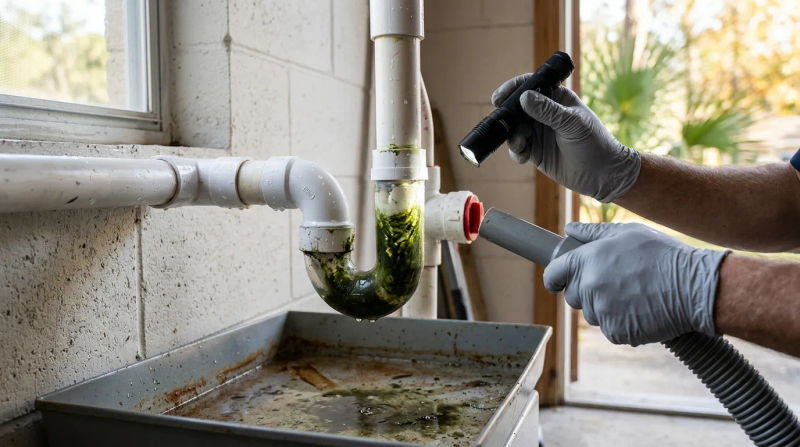
This water drips into the primary drain pan and flows through a PVC pipe (the condensate drain line) to the outside of your home. The problem is that this drain line is a dark, damp environment - the perfect place for algae, mold, and sludge to grow. Over time, this biological growth can build up and create a stubborn blockage.
In our hot and humid High Springs climate, this process happens much faster than in drier parts of the country. Add in dust, dirt, and other airborne debris that gets pulled into your system, and you have a recipe for a clog. This is a key focus of AC water leak prevention Florida; keeping that line clear is non-negotiable.
Many of the established homes in High Springs are classic mid-century Florida ranches from the 1950s. While these concrete block homes were built to last, their HVAC systems have often been updated over the years. Sometimes, the original drain lines are routed through slabs or in tight attic spaces that make them more prone to developing clogs that are difficult to access and clear without professional equipment.
When to Call a Professional
Some homeowners are comfortable with DIY maintenance, and there are steps you can take, like pouring distilled vinegar down the line periodically to help slow algae growth. However, once you have an active clog, the situation changes.
Attempting to clear a serious blockage with a wire or compressed air can sometimes push the clog deeper or even damage the PVC pipes, leading to a much more expensive repair. Using harsh chemical drain cleaners is a definite no-go, as they can corrode the pipes and damage your system.
You should call an experienced professional if you notice:
- Your system has shut off due to the safety float switch.
- You see any signs of water damage on ceilings, walls, or floors.
- The secondary drain pan is full of water.
- You are not 100% confident in how to safely access and clear the line.
A qualified technician has the right tools, like specialized vacuums and pumps, to safely and effectively remove the entire blockage without damaging your system. They can also thoroughly clean the line, pan, and coils to remove the biological growth causing the problem and recommend preventative measures.
Conclusion
A clogged AC drain line might seem like a small issue, but it can lead to costly water damage, poor indoor air quality, and a complete system shutdown, usually on the hottest day of the year. Don't let the milder weather of October lull you into a false sense of security. If you see a small puddle or notice a musty smell, that partial clog is just waiting for the next heatwave to become a full-blown overflow.
Being proactive is the key. Pay attention to the early warning signs - standing water, unexpected shutdowns, and musty odors. Addressing the problem early is always easier and more affordable than dealing with the aftermath of a major leak.
If you notice any of these signs, contact a local HVAC contractor for an inspection. A professional can quickly diagnose the issue and ensure your system's drainage is clear, protecting your home and your peace of mind.